How Long Does Acrylic Paint Take to Dry? Complete Artist Guide
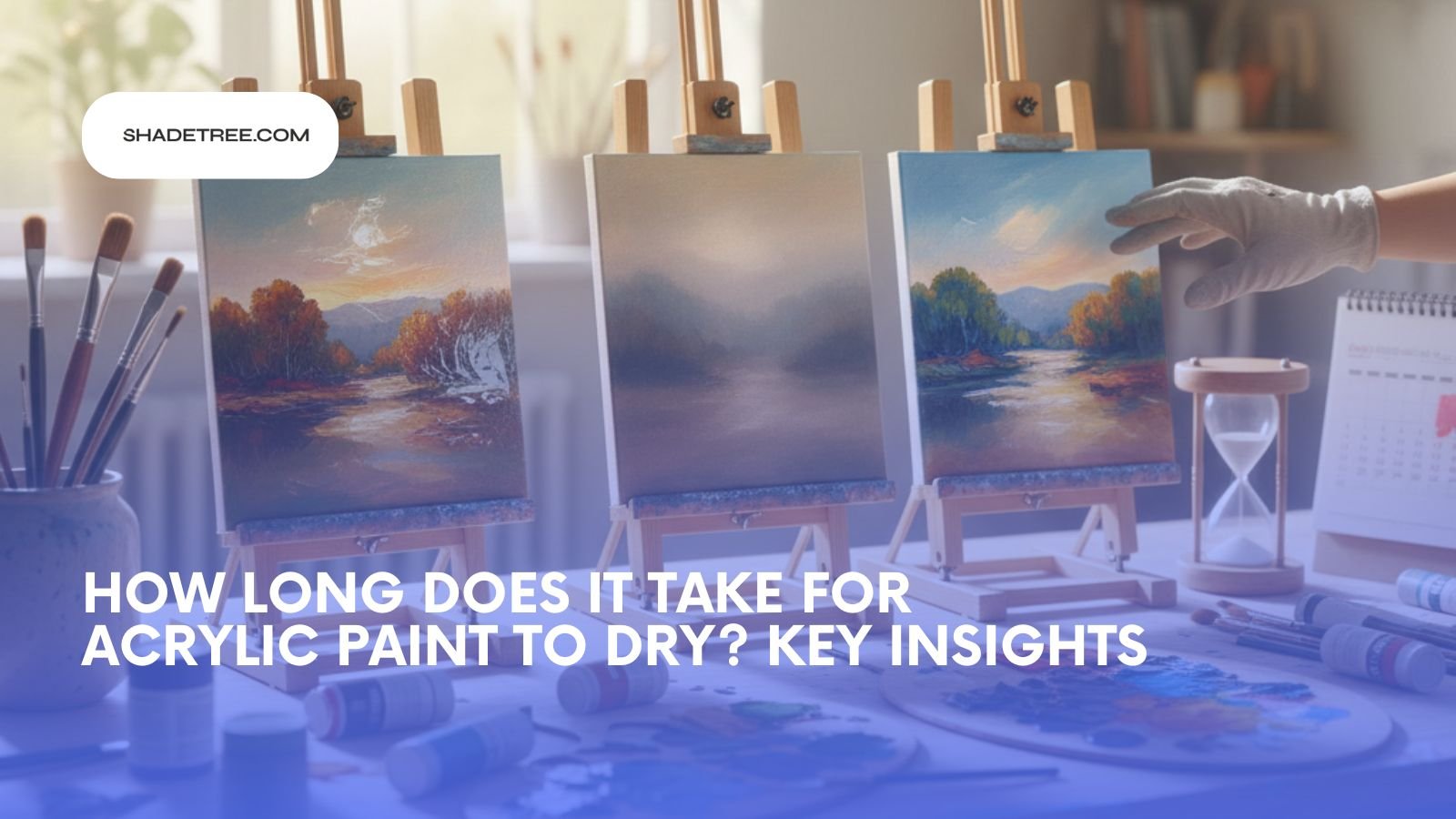
Though the exact time varies, acrylic paint dries faster than most other paints. In general, it can be touch dry in 30 to 60 minutes and fully hard in a few days. If you know how long acrylic paint takes to dry, you can plan your layers better, avoid smudges, and achieve your art is smooth and even.
How Long Does It Take for Acrylic Paint to Fully Dry?

The drying time of acrylic paint depends on various factors such as thickness, humidity, and temperature. Touch-dry time for most acrylic paints is between 30 and 60 minutes, but it can take up to five days for acrylic paint to fully cure. Oil paint takes weeks or months to dry, but acrylic paint dries quickly because the water in the paint film evaporates.
Amsterdam Acrylics says that thin paint layers dry more quickly while thicker films can trap water and make the drying process take longer. Thick layers need a few hours to dry, while thin films dry in a few minutes. You can apply acrylic paints in multiple coats as long as each paint layer is completely dry before adding the next layer.
Drying stages: Acrylic paint has two main stages—first stage (touch dry) and second stage (fully cured).
Environmental factors: Warm temperatures and airflow help paint dry faster, while high humidity slows the process.
Thicker films: Trap moisture and increase the drying time of acrylic paint.
Understanding the Stages of Acrylic Paint Drying
Acrylic paint dries in two stages. During the first stage, the surface becomes touch dry as water evaporates from the top layer. The second stage happens when the paint film fully cures, creating a durable surface. To test if your paint is completely dry, lightly touch a small area—if it feels cool or tacky, it still contains trapped moisture.
Using an acrylic medium instead of more water helps control drying time and prevents cracks in the paint film. According to Amsterdam Acrylics, artists can safely varnish their work after several days once the paint is fully cured.
Thin layers: Dry faster, ideal for adding details or dry brushing.
Thicker layers: Require longer drying time to prevent cracking or peeling.
Surface choice: Canvas and paper dry slower than wood due to air exposure differences.
How Can I Make Acrylic Paint Dry Faster?
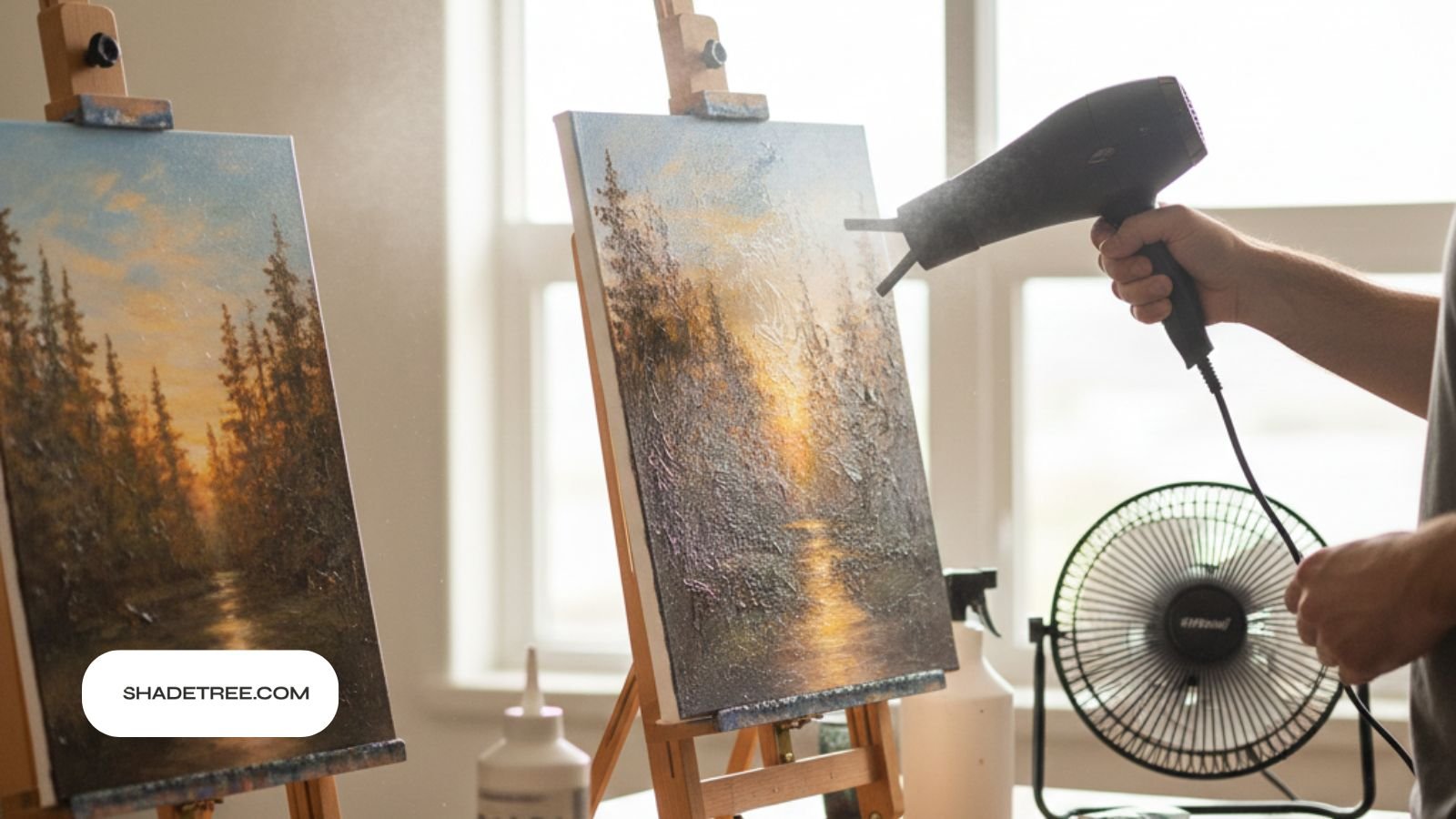
Change the temperature, air flow, and paint thickness to make acrylic paint dry faster. If you don't want to use heavy coats, use thin layers instead. Nova Color Paint says that a fan or blow dryer on the lowest setting will dry the paint faster without hurting the layer. When the air is warm and dry, the paint's water evaporates faster.
The paint will stay wet longer if the air in your studio is very humid. Use a dehumidifier or make sure the room has good air flow. If you are paint pouring or layering paint, wait until the first layer is completely dry before adding the next one. This will keep the colors from mixing.
Air circulation: Improves evaporation, reducing drying time.
Warmer temperatures: Help acrylic paint to dry faster and evenly.
Avoid more water: Use an acrylic medium instead of thinning with water.
Techniques to Control the Drying Process
For consistent results, always apply acrylic colors evenly and avoid using more paint than needed. Lightly mist the surface to keep it workable for blending, but avoid soaking it. Artists who prefer control use mediums that balance fast drying with flexibility, allowing them to build texture and create their own unique style.
Dry brushing: Perfect for quick highlights when paint is touch dry.
Layer timing: Wait 30–60 minutes between coats to prevent lifting the first layer.
Low heat: Use a blow dryer on the lowest setting to dry faster without damaging the surface.
By adjusting temperature, airflow, and paint thickness, you can manage how long it takes for acrylic paint to dry while maintaining quality and precision in every layer.
How to Tell If Acrylic Paint Is Dry
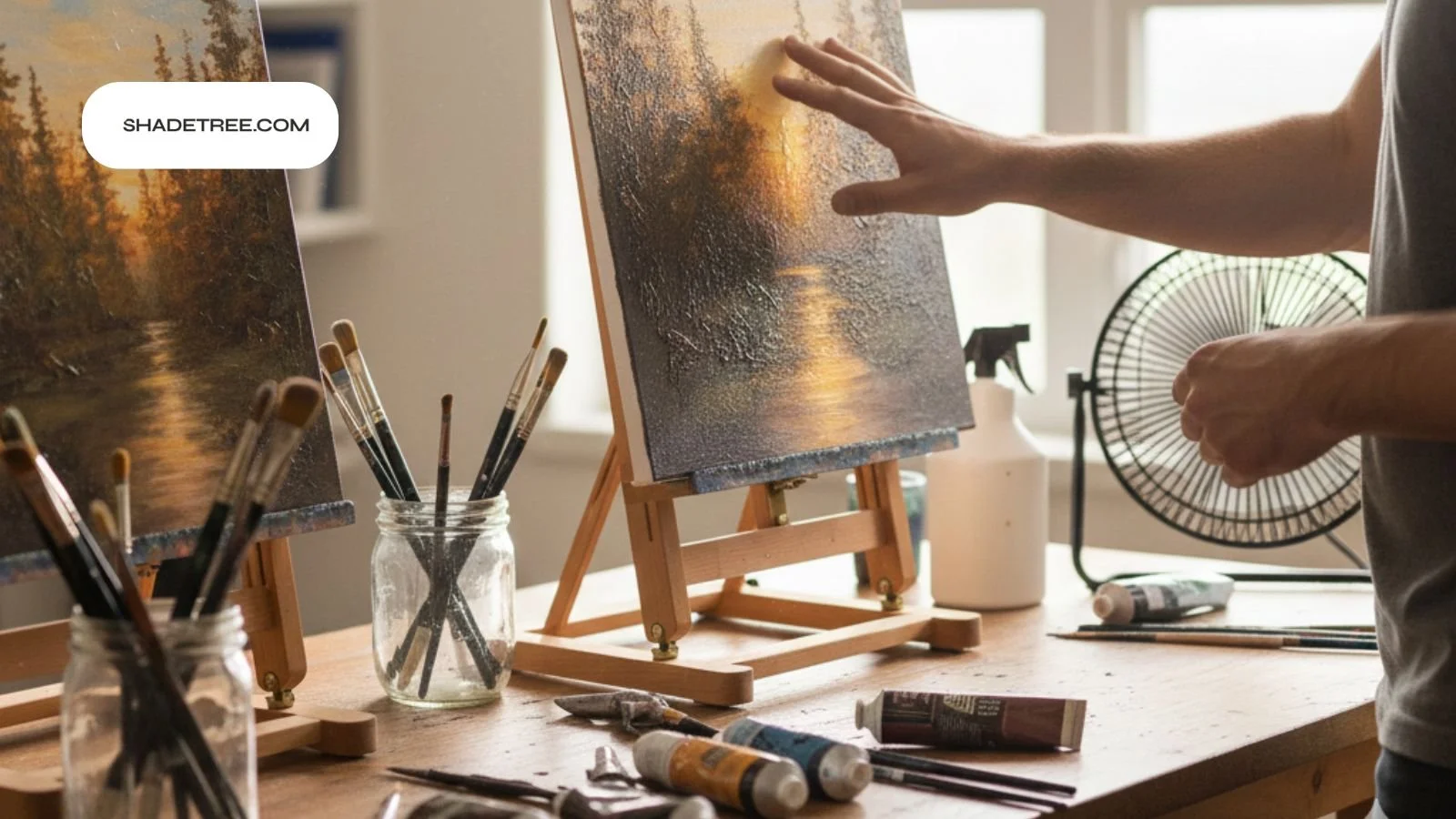
You can tell when it's safe to add more layers or varnish if you know how long acrylic paint takes to dry. First the paint is dry enough to touch, and then it's fully dry. The time it takes to do this can vary from 30 minutes to several days, depending on the temperature and humidity. There is still paint on the surface that feels cool or a little sticky. It's not ready for the next coat.
Nancy Reyner says that the sheen of your acrylic paint will tell you if it is dry. When paint is wet, it looks shiny, but when acrylic is dry, it turns matte as the binder clears. The thickness of the paint, the type of surface, and the amount of water or medium used all affect how long it takes to dry.
Touch test: Lightly touch an edge of the paint; if it’s sticky, wait longer before applying the second layer.
Visual cue: If the paint still looks shiny, it’s not completely dry.
Surface type: Canvas dries slower than paper or glass because it absorbs less moisture.
Techniques to Tell When Acrylic Paint Has Cured
To know when it takes acrylic paint is fully cured, wait at least three days for the paint film to harden completely. Artists who rush this process risk damaging the surface or mixing colors unintentionally when they add layers. The drying time of acrylic paint can also be influenced by other factors, like air movement or the use of an acrylic medium to slow or speed up drying.
Slow drying: Thicker coats or humid rooms delay drying time.
Dry quickly: Apply thin coats and keep the workspace warm.
Add layers: Wait until the previous coat is touch dry before continuing.
As Nancy Reyner’s guide explains, patience ensures even color results and prevents cracks caused by trapped moisture between paint layers.
Does Acrylic Paint Need Two Coats?
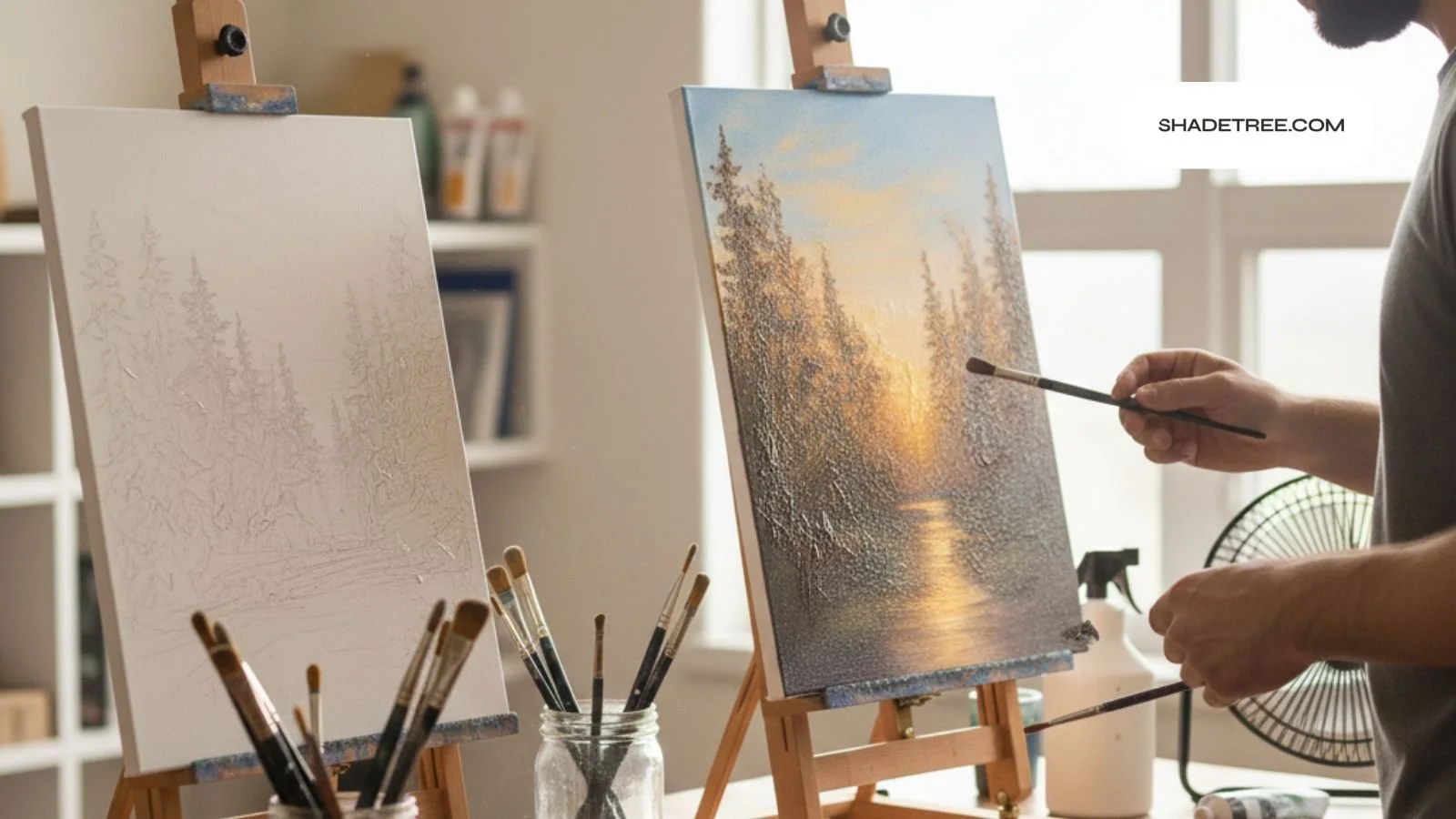
Most of the time, two or more thin coats of acrylic paint look better than one thick coat. Art Is Fun says that using more than one coat helps make coverage stronger, colors more vivid, and blending on canvas or paper smoother. Let the first coat dry all the way before adding the second one for the best results.
When planning how long it will take for acrylic paint to dry between coats, keep in mind that humidity, temperature, and the type of surface will all affect the time. When it's warm and dry outside, paint dries faster. When it's cold or wet, it takes longer.
Thin coats: Dry faster and avoid lifting the color below.
Heavy coats: Stay wet longer and can stick to brushes or palette edges.
Temperature control: Keep the room at a moderate warmth for faster drying.
Applying and Protecting Multiple Layers
Before applying a varnish, wait until the paint is fully cured to avoid cloudiness or peeling. Using an acrylic medium instead of as much water helps create smoother coats without weakening the paint film. If you paint on non-porous surfaces like glass, allow extra drying time for the paint to adhere properly.
Proper wait time: Give each coat enough time to cure before sealing.
Use of medium: Helps the paint blend evenly and stick better to the surface.
Brush maintenance: Clean brushes immediately to prevent dried paint buildup.
As mentioned in Art Is Fun, adding layers gradually produces a professional finish without extra cost or wasted paint.
Final Thoughts
Being aware of how long acrylic paint takes to dry can help you better plan your creative process. There are different types of surfaces and humidity that can make it take several days for acrylic paint to fully cure. Most acrylic paint is dry to the touch in about an hour. To keep the next coat or varnish from lifting or sticking, you should always wait. Your acrylic art will dry evenly and last longer if you are patient and use the right techniques.
FAQs
How long does it take for acrylic paint to dry on canvas?
Acrylic paint on canvas usually becomes touch dry in 30 to 60 minutes but may take up to three days to fully cure.
Does temperature affect the drying time of acrylic paint?
Yes, warm air helps acrylic paint dry quickly, while cold or humid environments slow the drying process.
Can I use an acrylic medium to control drying time?
Yes, an acrylic medium can make paint dry slower or faster, depending on the type you use.
How can I tell when acrylic paint is completely dry?
The paint surface will feel cool at first, then matte and firm once it’s fully cured.
Should I apply varnish right after the last coat?
No, always wait until the paint is fully cured before applying varnish to avoid trapped moisture or cloudy finishes.
